- Always competitive prices and perfect quality
- |
- sales@sydneytimberflooring.com.au




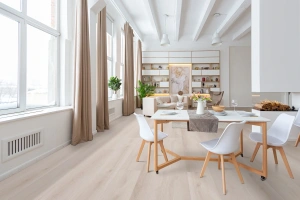


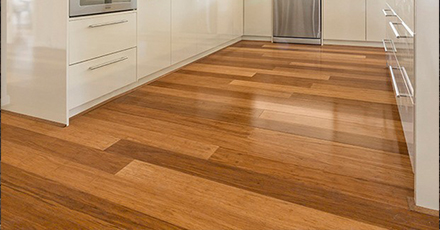
Quick Summary: The kitchen is one of the hardest-working floors in your home. It needs to handle spills, dropped utensils, constant foot traffic and the occasional flooding from a leaky dishwasher. This guide walks through the best flooring options for Sydney kitchens, what to look for, and which products from our range suit different kitchen styles.
What makes a kitchen floor different from any other room?
The kitchen puts demands on flooring that no other room comes close to matching. Before you choose a product purely on looks, consider what your kitchen floor actually has to deal with daily:
- Standing water and frequent liquid spills
- Grease and food residue that needs regular mopping
- Heavy foot traffic, often concentrated in tight cooking zones
- Dropped pots, pans and utensils
- Chair and bar stool legs scraping across the surface repeatedly
- Temperature fluctuations near ovens and dishwashers
A floor that looks beautiful in a showroom sample but cannot handle sustained moisture exposure will give you problems within a year or two. Getting this right from the start saves you a full replacement later.
The best flooring options for kitchens in Sydney
Hybrid flooring: the most practical kitchen floor going
Hybrid flooring is the most popular choice for Sydney kitchens right now, and it earns that position for very practical reasons. The rigid SPC (Stone Polymer Composite) core makes every plank 100% waterproof throughout, not just resistant on the surface. Water that gets in through joins, under the kickboards or from a leaking appliance cannot damage or swell the core.
This is what separates hybrid from laminate in a kitchen context. Laminate has a moisture-vulnerable HDF core. One dishwasher leak and you can be looking at lifting, bubbling planks. Hybrid does not react to water at all.
Beyond waterproofing, hybrid is solid underfoot in a way that standard vinyl is not. It does not flex when you stand on it for long stretches of cooking, which matters more than people realise until they compare the two.
It also runs seamlessly from your kitchen into adjacent living and dining areas, which is exactly what open-plan Sydney homes need. One floor, one look, throughout the entire space.
What looks good here: Tile-effect hybrid planks work particularly well in kitchens, giving the look of stone or concrete without the cold, hard underfoot feel of actual tile. Herringbone patterns add visual interest to a kitchen without requiring genuine parquetry.
Laminate flooring: great look, know the limits
Laminate flooring can work in a kitchen, but with caveats. If your kitchen is reasonably dry, you are diligent about wiping up spills quickly, and you have good appliances without a history of leaks, laminate performs well and looks excellent.
The photographic design layer in quality laminate gives you a very convincing timber look at a competitive price point. For a kitchen that connects to a living or dining area already fitted with laminate, running the same product through maintains visual continuity.
Where laminate struggles is in kitchens prone to sustained moisture: older homes with less ventilation, kitchens near laundries, or any setup where water routinely sits on the floor. If this sounds like your kitchen, step up to hybrid.
Choose AC3 or AC4 rating for a kitchen and ensure the joins are well fitted during installation. Gaps at the joins are where moisture gets in.
Engineered timber: warmth and character for the right kitchen
Engineered timber brings genuine wood to the kitchen. The real timber veneer on top gives you natural grain variation and depth that no printed product fully replicates, and it can be sanded back and refinished if the surface wears over time.
It is not waterproof, but the multi-layer plywood base makes it far more dimensionally stable than solid timber in the face of humidity and temperature fluctuation. A quality engineered floor in a well-maintained kitchen will perform reliably for many years.
It suits kitchens that are designed to feel warm, natural and high-end rather than slick and contemporary. Think Hamptons-style interiors, coastal homes with natural material palettes, and renovations where the kitchen is the centrepiece of the home.
The key rule: keep water off the surface and address spills immediately. Engineered timber is not the floor for a household where the kitchen clean-up philosophy is relaxed.
Browse our engineered timber options
Solid timber: stunning but demanding
Solid timber in a kitchen is a commitment. It looks extraordinary, adds genuine character and can last a lifetime if looked after properly. But it requires more care than any other option on this list.
Solid timber is not waterproof and reacts to moisture and humidity fluctuations. In a kitchen, this means strict maintenance discipline: spills wiped immediately, no wet mopping, regular oiling or coating to protect the surface. In the hands of the right homeowner, it ages beautifully. In a busy household with young children or heavy kitchen use, it can become a source of stress.
If you love the look of real timber in the kitchen but want something more forgiving, hybrid with a high-definition timber-look finish is the practical alternative that most Sydney homeowners are opting for.
Flooring by kitchen style: what works where
Contemporary and minimalist kitchens
Clean lines, handleless cabinetry and stone benchtops call for a floor that does not compete visually. Wide-format hybrid or laminate planks in pale oak, greige or concrete tones work brilliantly here. The longer the plank format, the cleaner the floor reads.
The Lumiere Ultra HD Hybrid 7mm suits this style well, with a high-definition finish that sits quietly under bold kitchen design without looking flat.
Coastal and Hamptons kitchens
White cabinetry, natural textures and a relaxed feel. Light blonde or whitewashed timber tones in engineered or hybrid work well here. Wider boards with a subtle grain suit the aesthetic better than tight, busy grain patterns.
The Avala Hybrid 6.5mm in lighter tones is a practical choice that captures this look while staying fully waterproof.
Bold and dramatic kitchens
Dark cabinetry, brass hardware, feature splashbacks. The floor here can be a statement rather than a background. Deep walnut, charcoal or smoked oak tones create real contrast and visual depth.
The Storm Luxury Hybrid 7mm is built for this. Bold, rich tones that hold their own in a high-design kitchen.
Traditional and heritage kitchens
Shaker cabinetry, stone benchtops, warm finishes. Herringbone patterns or classic medium-oak tones add character without being trendy. The Belle Vie Herringbone Hybrid 7mm is one of our most popular choices for this look: the herringbone pattern reads as traditional and crafted but the waterproof hybrid construction keeps it practical.
What to look for when choosing kitchen flooring
Waterproof rating
For a kitchen, waterproof is the baseline, not a bonus. Any product you consider should be 100% waterproof through the core, not just surface-treated. Check the product specifications, not just the marketing claims.
Slip resistance
Wet kitchen floors are a safety concern. Look for a product with a P3 or P4 slip resistance rating for kitchens. Many hybrid and vinyl products include texture embossing that improves grip underfoot when wet.
Wear layer
The kitchen floor takes more concentrated wear than almost any other room. Aim for a wear layer of 0.5mm or above. This is the layer that takes the scratches from furniture, dragged stools and dropped utensils.
Ease of cleaning
Avoid heavily embossed or textured surfaces that trap grease and food particles. A lightly textured or smooth finish is far easier to mop clean in a kitchen environment.
Subfloor preparation
Kitchens often have more complex subfloors than other rooms due to existing tile work, drainage slope near appliances and transitions to different floor levels. Our team assesses this during the free in-home measure visit and advises on preparation before any install.
Ready to see samples in your kitchen? We bring the samples to you, assess your subfloor, and give you a full written quote at no cost. No obligation. Book a free measure and quote
Maintenance: keeping your kitchen floor looking good
The right product makes maintenance simple. Here is what each option needs:
Hybrid and vinyl: Sweep regularly, damp mop with a pH-neutral cleaner. No oiling, no coating. Grease and food residue lifts easily. Avoid steam mops.
Laminate: Same as hybrid for daily cleaning, but keep water away from the joins. Do not let spills sit. Damp mop only, never wet.
Engineered timber: Sweep and damp mop only. Oil or recoat the surface on the manufacturer’s recommended schedule. Address spills immediately.
Solid timber: Sweep and dry mop daily. Oil regularly. Any liquid on the surface should be wiped up within minutes. Professional maintenance recommended every few years.
Choosing the right kitchen floor is one of the most practical decisions you can make in a renovation. Get it right and it performs quietly in the background for decades. Get it wrong and it becomes a recurring headache.
Our team has installed flooring across thousands of Sydney kitchens. We know what holds up and what does not. Call 1300 928 716 or book a free in-home measure and quote online and we will walk you through the right option for your space.
Sydney Timber Flooring | sales@sydneytimberflooring.com.au | NSW, Australia
Not sure what your subfloor will take?
Send a photo of the room and the rough measurements. We will tell you what will work and what will not.
Common questions
Most of our hybrid ranges are approved for both hydronic and electric underfloor heating. This is one of the key advantages hybrid has over laminate in kitchen applications. Always confirm compatibility at the time of your quote.
Quality hybrid products include surface embossing that provides reasonable grip when wet. Always check the slip resistance rating of the specific product you are considering for a kitchen install.
Yes, and this is one of the best design decisions you can make in an open-plan home. Hybrid flooring is the best product for this because it is waterproof in the kitchen zone and suits living and dining areas equally well.
Nothing permanent. The SPC core is completely waterproof. Wipe up the water, check under the kickboards if the leak was sustained, and the floor itself will be unaffected.
The click-lock system in laminate and hybrid is designed for floating installation and experienced DIYers can handle it in a straightforward room. Kitchens are more complex due to appliance cutouts, irregular shapes and existing subfloor conditions. Professional installation is recommended to avoid costly errors.
A quality hybrid or laminate floor installed correctly in a kitchen will typically last 15 to 20 years with normal maintenance. Wear layer thickness and AC rating are the biggest factors in longevity.
Read enough? Get a price for your floor.
We measure on site, quote in writing, and the quote covers subfloor prep. No obligation to go ahead.